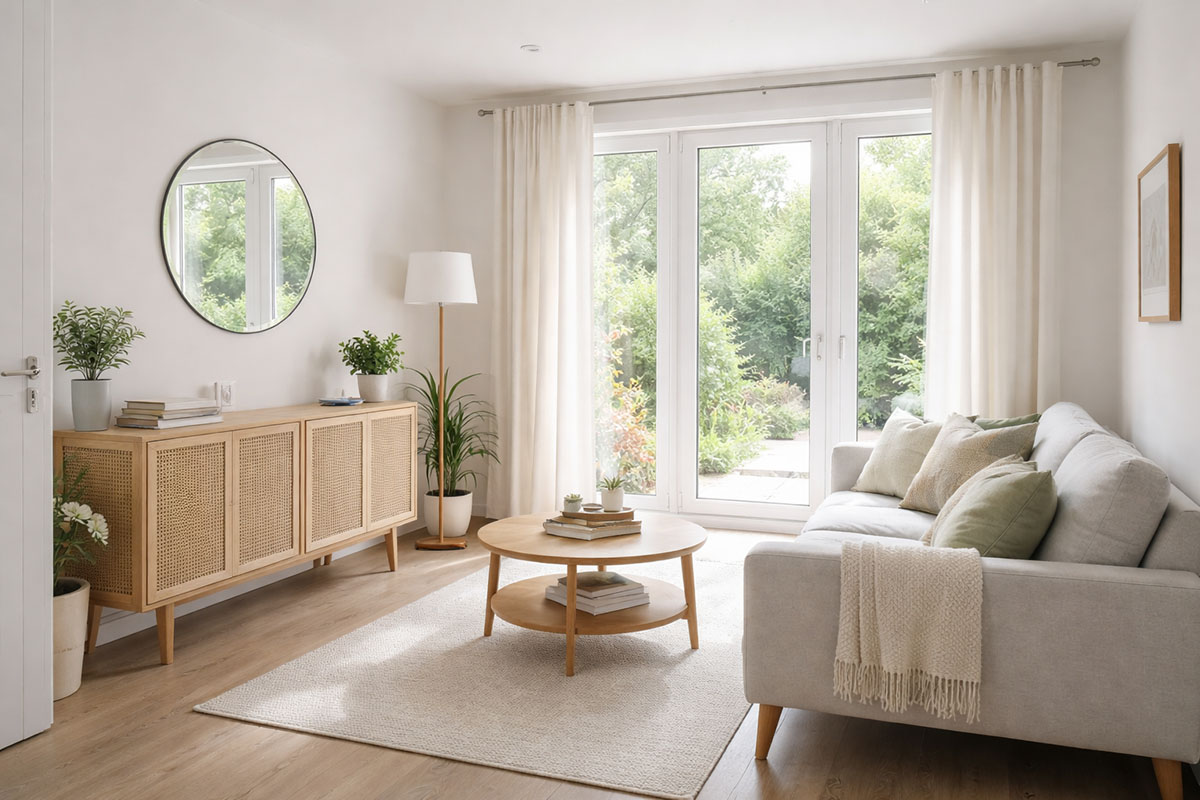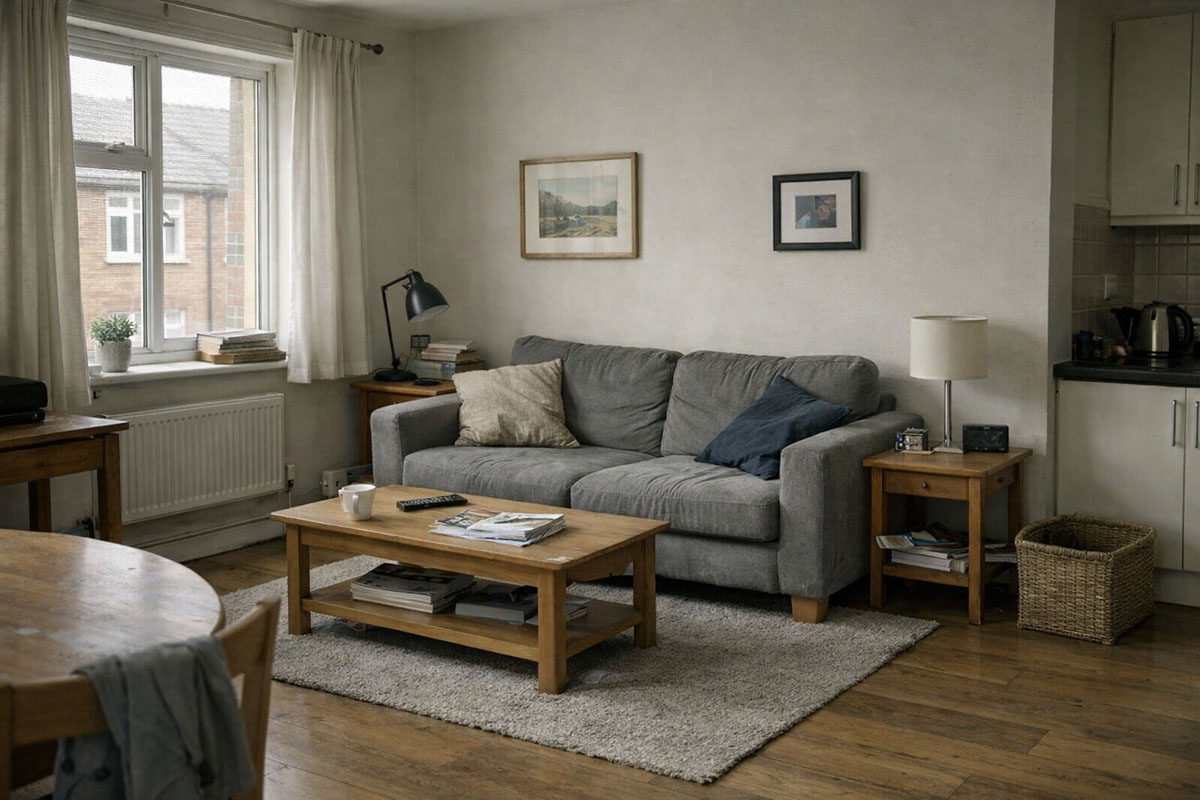
There’s a special kind of irritation that creeps in when you realise the flat hasn’t changed, while you have. The walls look the same at 7am as they do at midnight. The sofa sighs when you sit down, like it’s bored of you too. Moving out would be tidy and dramatic, yet the sums don’t add up and the letting market, at least here in the UK lately, feels faintly unhinged. So you stay. You stare. And you wonder when the place stopped feeling like yours.
That feeling doesn’t mean the flat has failed you. It usually means it’s been left on pause for too long.
Start with the things you stopped seeing
Most homes don’t go stale in one go. They drift. You stop noticing the curtain pole you never liked. The side table that was meant to be temporary is still there years later, wobbling. Door handles get a free pass simply by existing. None of these are dramatic problems, yet together they add a low-level hum of dissatisfaction.
One wet Sunday afternoon I realised I hated every lamp in my living room. Not disliked, hated. All bought at different times, all slightly wrong. Changing them felt indulgent, even faintly silly. Then evening arrived, the light softened, and the room felt calmer. I slept better that night, for reasons I still can’t fully explain.
Take stock, properly. Walk from room to room with fresh eyes, or at least pretend you’re viewing the place for the first time. Anything that makes you mutter “that’ll do” under your breath deserves attention.
Paint as a reset button
Paint is the quickest way to tell your flat you’ve changed your mind. It’s messy, annoying, smells odd for a while, yet the result lands hard. A new colour shifts how light behaves. Corners soften. Ceilings either lift or press down, depending on your nerve.
There’s been a quiet return to warmer shades lately, partly a reaction to years of grey-on-grey rentals. Soft clay tones, chalky greens, off-whites that lean creamy rather than clinical. I resisted at first, convinced white was the only grown-up choice. Turns out grown-up can be warmer.
You don’t need to repaint every wall. One room done well can tilt the mood of the whole flat. Even a hallway, often ignored, sets the emotional tone the second you walk in. It’s a handshake with your own home.
Lighting changes how you feel more than you expect
Overhead lighting is practical. It’s also unforgiving. Flats often come with one central fitting per room, usually installed with no sense of atmosphere. Swapping bulbs helps, yet adding layers matters more.
Table lamps, wall lights, even a floor lamp tucked into a corner can turn a room from a waiting area into somewhere you linger. Light at eye level feels human. Light above your head feels official.
There’s a moment, late evening, when the street outside goes quiet and the right lamp makes the room feel held together. That’s not decoration talking. It’s how the space responds when the light finally suits it. Either way, it works.
Furniture that stayed too long
Some pieces earn their place. Others simply survive. That bookcase you meant to replace after payday six years ago is still here. The chair that never quite fits the table remains out of habit.
Replacing furniture doesn’t mean buying lots. Sometimes it means buying one thing that actually belongs. Scale matters. A slightly larger sofa can make a room feel calmer. A smaller dining table can give space back to your legs and your head.
Second-hand options have improved wildly in recent years. Online marketplaces, local resellers, even charity shops have stepped up their game. You might find something with weight, with a past. That counts for something, even if you can’t explain why.
Hardware and fittings you forgot you could change
Door handles, switches, knobs. These get touched more than almost anything else in the flat, yet they’re often the least considered. Swapping them feels minor until you do it. Then suddenly every door feels intentional.
The same goes for cupboard handles in kitchens or bathrooms. Changing them can tilt the entire room without ripping anything out. I once replaced tired chrome handles with something warmer and caught myself smiling while making tea. Slightly embarrassing. Still true.
The kitchen doesn’t need gutting
A full kitchen refit is expensive, disruptive, and rarely necessary. Repainting units can take a space from dated to calm with time, patience, and decent tape. New worktops shift the visual weight of the room more than expected.
Open shelving, used sparingly, can break up heavy runs of cupboards. It does require discipline. If your idea of storage leans chaotic, keep shelves for things you like looking at. Mugs, bowls, the good olive oil you pretend you use daily.
Recent energy price rises have also pushed attention towards smaller upgrades rather than big renovations. Induction hobs, efficient appliances, better lighting. These changes feel practical and oddly comforting.
Rearrange before you buy
Moving furniture around costs nothing except a mild back ache. It also breaks habits. A sofa angled differently can make a room feel wider. A desk by the window might change how mornings start.
I once shifted my bed to face a different wall and slept badly for a week. Then better than before. Brains are fussy like that.
Rehang artwork. Mix frames. Leave some walls empty for a while. Homes don’t need to be finished to feel right. Sometimes they need to breathe.
Smells, sounds, and the less visible stuff
Scent is powerful and unpredictable. A flat that smells faintly of old carpet will never feel fresh, no matter how well styled. Deep cleaning helps. So does opening windows daily, even in winter, even briefly.
Textiles absorb more than you think. Cushions, rugs, curtains. Washing or replacing them can shift the entire sensory read of a room. Add a rug where there wasn’t one. Remove one that’s been annoying you quietly for years.
Sound matters too. Soft furnishings dampen echo. Music behaves differently in a room with weight and texture. Silence feels kinder.
Small changes add up, even financially
Improving a flat without moving keeps costs contained and stress lower. It can also help when selling or renting later. Buyers notice spaces that feel cared for. They sense attention, even if they can’t name it.
That said, the real return is personal. Feeling comfortable at home changes how you show up elsewhere. Work feels less draining. Evenings stretch out instead of collapsing.
Loving a flat again doesn’t arrive with one big gesture. It creeps back in through paint splashes, new light, the relief of throwing out something that’s annoyed you since 2019. One day you realise you’re staying in more often, by choice. The place feels quieter, kinder. And for now, that’s enough.
Frequently asked questions
Q: How can I refresh my flat without moving?
A: Start with the quickest wins: repaint a room, swap tired lighting, and move furniture into a new layout. Small upgrades like new handles and soft furnishings can change the feel fast.
Q: What’s the cheapest way to make a flat feel new again?
A: Rearranging furniture, rehanging art, and changing bulbs to warmer light are low-cost and high-impact. A deep clean and washing textiles like curtains can also reset the space.
Q: Is painting worth it if I’m bored of my flat?
A: Yes, paint can make rooms look brighter, cleaner, and more current without major work. It’s one of the most effective flat makeover ideas for a visible change.
Q: How to improve lighting in a flat with one ceiling light?
A: Add layered lighting with table lamps, a floor lamp, and warm bulbs to soften shadows. Spreading light at different heights makes a room feel more comfortable and lived-in.
Q: Can to update my kitchen without replacing it?
A: Yes, repainting kitchen units and changing handles can refresh the look for less than a refit. If budget allows, replacing the worktop is another upgrade that changes the whole room.
Q: Do small upgrades like door handles and switches really make a difference?
A: They do, because you touch them every day and they’re easy to notice once upgraded. New hardware can make a flat feel more finished without big building work.
Q: Will these changes add value to my flat?
A: Many can, especially fresh paint, improved lighting, and a cleaner, more cared-for finish. Keeping upgrades neat and neutral can help resale appeal later.
Q: What should I change first when I feel stuck in my flat?
A: Pick one area you see daily, like the hallway or living room, and make a focused change. A new wall colour or better lighting can lift the mood and motivate the next step.
Tags: bored of my flat, refresh a flat without moving, small flat makeover ideas, repainting a flat, lighting ideas for flats, renting friendly home upgrades, make flat feel new again, improve flat value, MG0367