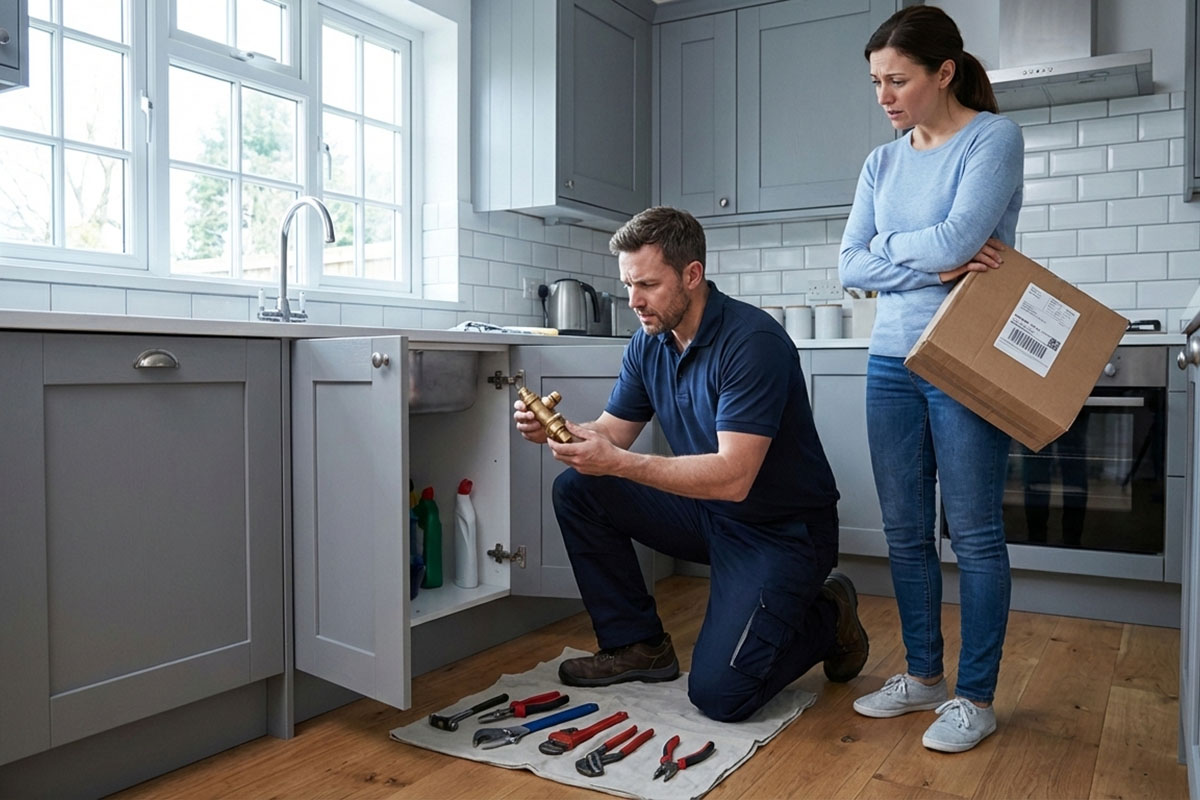
The boiler is open. The engineer is kneeling on your kitchen floor. He pauses, turns the small brass valve in his hand and says, “This is the wrong one”.
That sentence can cost you a week of home repair downtime.
Most homeowners never plan for that moment. You book the tradesperson, you order the part online, you feel organised. Job done. Until it is not. This article will show you how to avoid that stall, how to recover fast if it happens, and how to keep your repair moving without paying twice for the same visit.
Let’s get into it.
Why homeowners source their own parts in the first place
I understand the instinct. You see a shower valve online for less than your plumber quoted. The boiler fan assembly looks identical to the one in your cupboard. Delivery says “in stock”. Click. Ordered.
Sometimes it works perfectly.
Other times, the model number differs by one letter. The connector is a different diameter. The electrical rating is slightly off. Tiny differences. Big consequences.
Homeowners usually buy parts themselves for four reasons:
They want to save money.
They prefer a specific brand.
They think it will speed things up.
They like being in control of the process.
There is nothing wrong with any of that. The issue is coordination. Once you choose to source the part, the responsibility for accuracy shifts to you. The tradesperson arrives ready to fit what you have supplied. If it does not match, the clock keeps ticking.
And that ticking can get expensive.
The real cost of getting it wrong
The first cost is labour time. Most trades charge a call-out or a minimum booking window. If they cannot complete the job, they still need to cover that time. A second visit may mean another call-out fee.
The second cost is disruption. No hot water. No heating. A half-installed shower. Your kitchen tap disconnected. Living around an unfinished repair is frustrating in ways you only notice once you are brushing your teeth with bottled water.
The third cost is delay. Standard couriers often mean next-day delivery at best. Miss the cut-off and you wait longer. Meanwhile, the engineer’s schedule fills up.
I once saw a simple thermostat replacement stretch over nine days because the homeowner ordered three near-identical units before landing on the correct one. Each delivery took time. Each visit required rebooking. By the end, the savings had vanished.
So how do you reduce the risk when dealing with urgent spare parts for a live repair?
Confirm specifications before you click “buy”
Before you place an order, get the exact specification from your tradesperson. Not a description. Not a guess. The precise model number, size, rating and any compatibility notes.
Send them the product link. Ask, “Is this the correct part?” It takes five minutes. That five minutes can prevent a wasted appointment.
Why does this matter? Because many components look interchangeable. They are not. Boiler parts, concealed shower valves, electric shower cartridges, appliance connectors, even simple compression fittings can vary in subtle ways. A 15mm fitting and a 22mm fitting do not negotiate with each other.
Short message. Clear answer. Less risk.
Inspect the part when it arrives
Do not leave the box sealed until installation day. Open it. Compare it against the existing component if possible. Check dimensions. Check connectors. Check voltage labels.
This is where many people slip. They assume that if the packaging is correct, the contents must be correct too. Returns departments are full of items that were ordered in good faith and never opened until it was too late.
One small habit saves hours later.
Keep backup suppliers in mind
Even if you order online, identify at least one local supplier who carries similar stock. Save their number. Know their location.
Why? Because if something goes wrong on the day, speed matters more than price.
And here is the turning point.
What to do if you discover the problem on the day
The engineer is on site. The part does not fit. You have two choices. Cancel and rebook for next week. Or move quickly.
First, call a local supplier and confirm they have the correct component in stock. Ask them to hold it. Confirm the exact model and specification. Double check with your tradesperson while they are still there.
Then arrange collection.
When a critical component needs to be sourced quickly, an urgent delivery service can provide emergency part replacement by collecting the item from a supplier and deliver it directly to your property the same day. That single decision can mean the difference between finishing the repair today or waiting another week.
I have seen homeowners salvage a job within hours by doing this. The engineer stays on site. The correct part arrives. Work continues. Crisis avoided.
Is it always necessary? No. Is it sometimes the smartest move in the room? Yes.
Where this happens most often
Boiler and heating components are frequent offenders. Fans, pressure sensors, diverter valves. They look similar across models and yet differ just enough to cause problems. Manufacturers and bodies such as the Gas Safe Register stress the importance of correct specification when replacing gas-related parts.
Shower valves and concealed fittings are another common trap. Once installed behind tiles, access is limited. Ordering the wrong cartridge wastes both time and patience.
Electrical control units and smart thermostats follow closely behind. Wiring configurations vary. Mounting plates differ. Firmware compatibility can surprise you. Compatibility guidance from organisations such as the Electrical Safety First shows how specification mismatches can create real installation issues.
Appliance connectors and specialist trim pieces can also derail a job. Small parts. Big delay.
Have you ever postponed a repair because of one missing item? It happens more often than people admit.
Balance savings with contingency planning
Sourcing your own parts can reduce upfront cost. It can give you more choice. It can speed up scheduling. It can also increase risk if you do not build in a safety net.
The safety net is simple.
Confirm specifications.
Inspect early.
Know your backup supplier.
Have a rapid collection option in mind.
That is not paranoia. That is preparation.
The homeowners who handle this well are not lucky. They are organised. They treat the part as part of the project, not as a separate purchase.
One wrong valve can stall everything. One quick decision can fix it.
Repairs rarely fail because of skill. They fail because of timing.
Plan for accuracy. Act fast if needed. Keep the job moving.
If you are preparing for a home repair soon, take ten minutes today to confirm your part details and identify a backup supply option. It could save you days later. And if you have already experienced a delayed repair, adjust your process before the next one. Small changes now prevent big disruptions next time.
Tags: urgent spare parts, home repair delays, wrong boiler part, avoid repair downtime, same day spare parts delivery, emergency part replacement, prevent home repair disruption, MG0372