That sharp, chemical smell you notice when someone opens an old wardrobe? Some people scatter it around their home hoping mice will pack their bags and leave. They don’t. They pause. They sniff. Then they carry on as before.
This matters more than most realise. If you are dealing with scratching in the walls or droppings under the sink, guessing wastes time. This article breaks down what mothballs actually do, why mice ignore them, and what works instead, so you can stop experimenting and start fixing the problem.
Why mothballs end up in cupboards, lofts, and garages
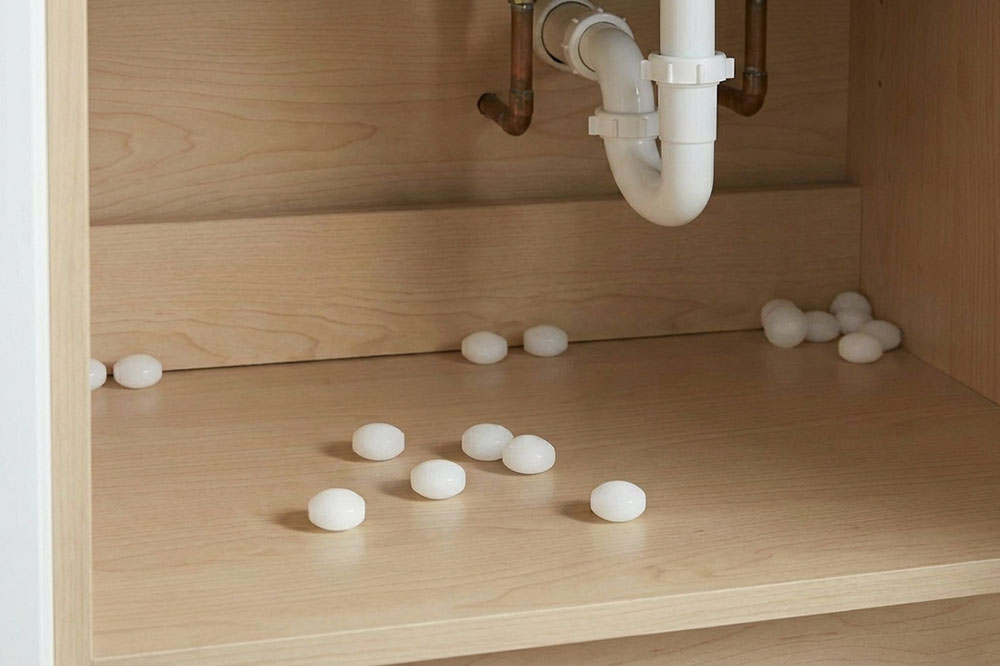
Mothballs have earned a strange reputation. Strong smell equals strong solution. That logic spreads fast, especially when neighbours, forums, or family advice get involved. I have lost count of the times I have opened a cupboard and found mothballs tucked behind paint tins or near pipework, placed with quiet hope.
Here is the snag. Mothballs were created to kill clothes moths in sealed spaces. They release fumes that build up and affect insects that live and feed on fabric. Mice don’t work the same way. They breathe the air, wrinkle their noses, and move a few inches to the side if something smells unpleasant. Food and shelter pull harder than odour.
What mice actually do when they smell mothballs
Mice are practical creatures. If a smell causes discomfort, they avoid it for a moment. If the smell sits near warmth, crumbs, or nesting material, they tolerate it. That tolerance grows fast.
Mothballs don’t chase mice out. They encourage small detours. That is all.
Ask yourself this: if the smell was strong enough to drive mice away for good, how would it feel to live with it day and night?
The indoor fallout people forget about
Inside a home, mothballs cause more trouble for people than for rodents. The fumes seep into soft furnishings and clothes. The smell clings. Windows stay open longer. Heads ache. Pets sniff around objects they should not touch. Children see small white balls that look harmless.
This is not about being alarmist. It is about patterns. Every winter, I hear the same story. Someone tries mothballs in a cupboard. Weeks later, the house smells off and the mice still appear at night. Two problems instead of one.
Short sentence. Waste of effort.
Using mothballs outside makes even less sense
Outdoors, mothballs fade fast. Rain, wind, and open air scatter the fumes. Mice travel under cover, along walls, through soil, and beneath decking. They never sit still long enough to care about a smell that drifts away by morning.
There is another issue. The chemicals don’t vanish. They sink into soil. They wash toward drains. Gardens don’t benefit from that experiment. The mice still find a gap near the air brick and head inside once the temperature drops.
So why does this idea stick around?
The myth refuses to die for one reason
People mix up poisoning with repelling. Yes, a mouse that eats enough mothballs could die. That doesn’t mean mothballs repel mice. Rodents avoid eating things that smell wrong when other food exists. Kitchens, bins, bird seed, pet bowls. The menu is generous.
Once that misunderstanding takes hold, advice spreads. Someone tries it. Someone else repeats it. The myth stays alive.
Here is the real question worth asking: why try to make mice uncomfortable when you can stop them getting in at all?
What works inside a house and why it works
Mice enter homes for warmth, food, and shelter. Remove those reasons and the problem shrinks fast.
Start with gaps. Any opening wider than a pencil invites trouble. Pipes under sinks, cable entry points, cracks near floor level. Fill them properly. Steel wool works as a short-term plug since mice hate chewing it. Permanent sealing keeps them out because there is no route left to use.
Food comes next. Open packets, crumbs behind appliances, pet food left overnight. Mice follow smell trails like a map. Seal food in glass or metal containers. Clean worktops before bed. That removes the reward.
Clutter matters more than people expect. Cardboard boxes, old bags, and forgotten corners give mice places to hide. Clear spaces force them into the open. They dislike exposure. Predators taught them that lesson long ago.
I have seen mouse activity drop within days just by moving stored items away from walls. No chemicals. No tricks. Just removing cover.
Outside habits that quietly invite mice in
Gardens and outdoor areas often undo indoor efforts. Compost bins left open turn into feeding stations. Bird seed spills attract rodents before birds arrive. Wood piles stacked against walls act like ladders.
Pull these things back from the house. Keep bins sealed. Store seed securely. Trim climbing plants that reach rooflines or vents. Mice climb well. Do not give them a handhold.
Foundation gaps deserve attention too. Small cracks feel harmless until winter hits. Cold drives mice indoors. Warmth keeps them there.
Already dealing with mice?
Prevention works best early. If mice are already present, traps placed along walls and behind objects work because mice follow edges. They avoid open floors. Positioning matters more than quantity.
Humane or snap traps both have a place. What matters is breaking the cycle so new mice cannot replace the old ones. Without sealing entry points, trapping turns into an endless loop.
Have you ever solved part of a problem and wondered why it kept returning? This is one of those moments.
A brief pause for honesty
I understand the appeal of quick fixes. A bag of mothballs feels cheaper than crawling under sinks with a torch. I have tried shortcuts myself over the years. They rarely pay off. Mice reward effort, not guesswork.
Short sentence. Always.
Where this leaves you
Mothballs do not repel mice. They create smell, discomfort, and false confidence. Mice adapt. Homes suffer.
The fix looks less dramatic and works far better. Seal gaps. Remove food access. Reduce hiding places. Control existing mice properly. These steps work because they remove the reasons mice choose your home in the first place.
If you suspect mothballs might be doing the job, now is the time to stop testing theories. Walk through your home. Look low. Look closely. Block the routes mice use and remove what draws them in. Take action today and you stop the problem at its source rather than chasing it room by room.
Tags: do mothballs repel mice, mothballs against mice, mice repellent myths, how to keep mice away, mouse prevention tips, are mothballs effective for mice, mice in house solutions, stop mice entering home, mothballs mouse control, home mouse prevention, MG0353