The first brown stain on a ceiling can feel like the start of the problem. It rarely is. By the time rain has made its way indoors, water has already found a route through the roof, past layers meant to keep it out, and into places you can’t see.
That is why a dry-weather roof check earns its keep. It helps you spot weaknesses before they become leaks, damp patches, ruined insulation or stained plaster. Left unresolved, persistent moisture can eventually affect roof timbers and create conditions where rot begins to develop.
This guide keeps things practical and safe: what you can check from ground level, what to look for in the loft, and when to look again after seasonal changes. For UK homes, wind, moss, blocked gutters, frost and heavy downpours are often part of the same story. Catch the early signs, and you stay ahead of it.
1. Rain often reveals roof problems rather than causing them
Rain gets the blame because it arrives at the same time as the drip, stain or damp smell. Yet many roof defects have usually been building for weeks or months before water appears indoors.
A loose tile may sit slightly lifted after a windy spell. Mortar along a ridge may crack during frosty weather. Flashing around a chimney may start to pull away at one edge. Gutters may clog slowly with leaves, moss and grit until water backs up and runs where it should never go. None of these problems needs a dramatic storm to exist.
Water is patient. It can travel along rafters, run beneath old felt, creep behind plasterboard or follow framing before it shows itself in a room. The wet patch on the ceiling may appear some distance from the actual entry point. That is one reason roof leaks can feel so frustrating.
I have seen loft insulation look dry on top, then lift it and find a cold, flattened layer beneath, with a faint musty smell rising from it. The room below had only a pale mark near the cornice. Small sign. Bigger issue.
A visible leak is often the last symptom you notice. By then, you may already be dealing with damp insulation, timber staining, mould growth or decoration damage. Small external faults are usually far easier to sort before water gets inside.
2. The best time to inspect your roof is before bad weather arrives
A sensible roof-check habit follows the seasons rather than reacting to problems. In the UK, the best time to look is before autumn and winter bring longer wet spells, stronger winds and frost. A calm check in late summer or early autumn gives you time to deal with small defects before the weather begins to test them.
If that visual check raises concerns, arranging a comprehensive roof inspection by a professional roofing company before the wetter months arrive can identify defects that are difficult to assess safely from the ground or inside the loft. It also provides a clearer picture of the roof’s overall condition before bad weather puts it under pressure.
Before autumn and winter
Look for early signs of weakness before the weather starts testing every joint and edge. A slipped slate, cracked verge mortar or gutter full of moss may sit unnoticed through dry weeks. Once heavy rain starts, that small weakness can let water through or send it spilling down brickwork.
This is the moment to ask: what would happen if this roof had to cope with three days of wind-driven rain?
After storms, once it is safe
A post-storm check is useful, though it shouldn’t be the only time you look. High winds can move tiles, loosen ridge pieces, bend gutter brackets and drop branches onto the roof. Check the ground too. Broken tile fragments, bits of mortar or slate chips often tell you something has shifted above.
Wait until conditions are safe. Roofs, paths and ladders can stay slippery long after the rain stops.
During dry, bright conditions
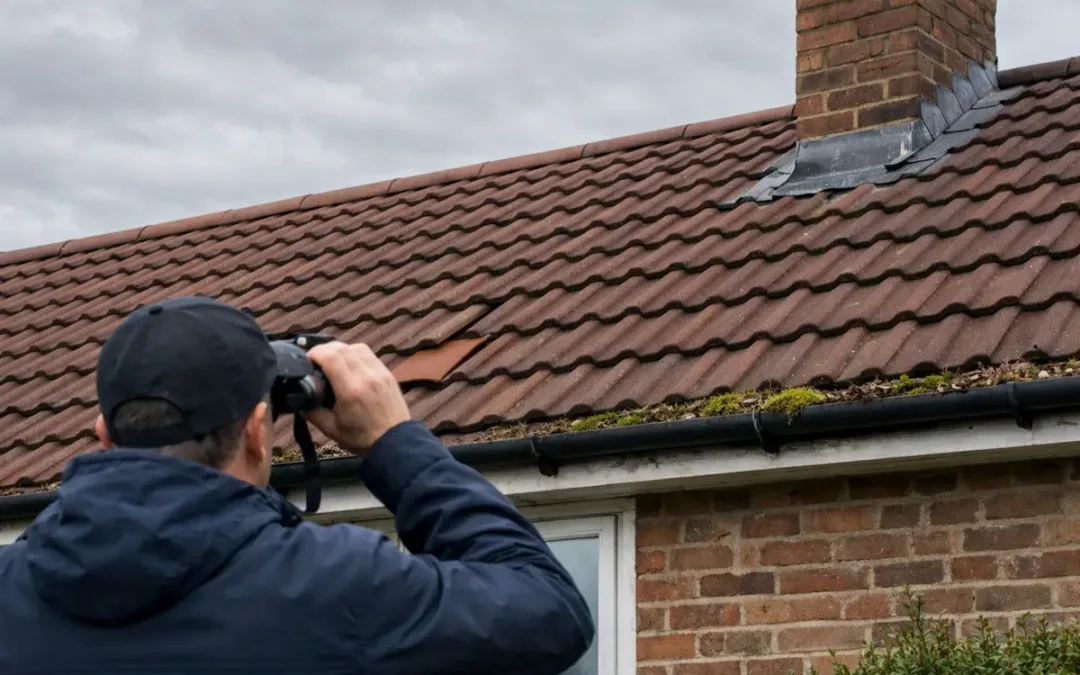
Dry daylight makes inspection easier. You can see uneven tile lines, cracked mortar, sagging gutter runs and moss build-up without rain in your eyes. It also removes the urge to rush. Stand back, use binoculars if helpful, use upstairs windows where they give a safe view, and take photos if something looks different.
3. What to look for outside without climbing onto the roof
You can learn a great deal without leaving the ground. Stand well back from the house so you can see the full roof slope, then look along the roofline for sagging, dips or sections that appear uneven. Changes that weren’t there before deserve closer attention.
Next, scan the tiles or slates. You are looking for missing pieces, slipped rows, cracked edges or tiles that seem lifted at one corner. One moved tile can give wind and rain a way in, especially on an exposed side of the house.
Check ridge tiles and hips from a safe position. Gaps in mortar, loose-looking sections or pieces that sit out of line can allow water beneath the ridge. Frost can make old mortar crumble, and wind can exploit the gap.
Chimneys deserve a slow look. Damaged flashing, crumbling mortar, leaning pots and plant growth can all point to water entry points. Chimney leaks often show indoors as staining around chimney breasts, so exterior clues matter.
Valleys, where two roof slopes meet, collect debris. Leaves and moss can slow water, forcing it sideways beneath tiles or over the edge of the valley lining. If you can see a dark, clogged channel from the ground, make a note of it.
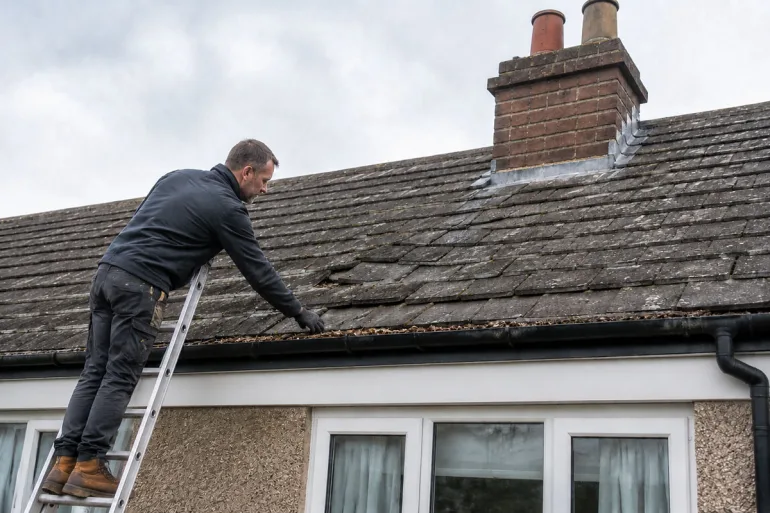
Gutters and downpipes are part of the roof’s defence. Overflowing water, green staining on walls, plants growing from the gutter or marks below joints often point to blockages or poor falls. If the same joint spills every time it rains, the wall below may stay damp for long periods.
Moss needs a balanced view. A light covering is common on many UK roofs. Heavy build-up can hold moisture, slide into gutters and interfere with drainage. It may also hide cracked or slipped tiles.
After wind, look around paths, patios and flower beds. Branches, tile fragments or broken mortar on the ground can be the roof sending you a message. Listen early.
4. What to check inside before a leak becomes visible
The loft is often the easiest place to trace developing roof problems. Choose a dry, bright day and inspect from a safe boarded area if you have one. Take a torch, then pause and let your eyes adjust before you begin looking around.
Start with daylight. Pinpricks of light around chimneys, valleys, vents, roof windows and junctions can suggest gaps outside, although some may simply reflect normal construction details or ventilation openings. Even so, unexpected points of light are worth noting because they show where weather may be getting close.
Look at the underside of the felt or membrane. Staining, sagging, tears, damp patches or track marks show where water may have travelled. Brown lines on felt can sometimes help trace the route water has taken towards the entry point.
Check rafters and roof timbers. Dark staining, soft patches, white deposits, mould or a musty smell all deserve attention. Roof timbers should appear sound and free from signs of persistent damp or decay, rather than showing obvious staining, distortion or areas that have become soft.
Insulation can also give the game away. Damp, stained or unusually flattened insulation may mean water has entered, or condensation is building up. Either way, recurring moisture should be dealt with. Condensation and roof leaks have different causes, yet both can damage materials if left alone.
In upper rooms, look at ceilings and wall tops. Faint stains, bubbling paint, peeling wallpaper or discolouration around chimney breasts can appear before a full leak. Take photos with dates. If the mark grows after bad weather, you have useful evidence for whoever inspects it.
5. Small warning signs that should prompt quick action
Some roof defects look too minor to worry about:
It’s only one tile.
The stain dried out.
The gutter only overflows in heavy rain.
Those seemingly isolated issues often point to a problem that’s quietly getting worse.
A single slipped or missing tile should be checked, especially on an exposed elevation. Wind can lift surrounding tiles, and rain can reach the underlay. Repeated gutter overflow in the same place also deserves action, since water may soak walls, fascias and brickwork every time it rains.
Fresh internal staining matters even if it dries. A stain may simply show where an earlier leak occurred, but it can also point to moisture that remains trapped elsewhere in the roof or wall structure. Damp smells in the loft after wet or windy weather suggest moisture is getting in or failing to escape.
Loose flashing around chimneys, dormers, roof windows or abutments should never be ignored for long. These junctions handle a lot of water, and small gaps can become direct entry routes. Cracked mortar on ridges, verges or chimney stacks also points to weathering that will usually worsen through frost and wind.
New debris on the ground after windy weather is another clue. If you find tile pieces, mortar or slate fragments, look up from a safe spot.
Water near electrical fittings, loft wiring or ceiling lights is urgent. Avoid using affected fittings and, if it can be done safely, isolate the relevant electrical circuit before arranging prompt inspection by the appropriate professional. Electricity and moisture don’t negotiate.
6. Turn roof inspection into a simple habit, not a panic job
Roof checks work best as a routine rather than a repair strategy. For many homes, two visual inspections a year are enough: once before autumn and winter, then again after winter has passed to see what the weather has left behind.
Add a brief check after high winds or prolonged rain, once conditions are safe. Use the same viewing spots each time so changes stand out. Photos help here: roof elevations, gutters, chimney areas and loft details give you something to compare against later.
Keep simple notes too. Dates of stains, gutter overflow, damp smells or visible movement can reveal a pattern. Was that mark there before the last storm? Did the gutter spill in the same place last month?
Stay off the roof. Many useful checks can be done from ground level, upstairs windows or inside the loft. The aim is to notice change early, then bring in proper help when needed.
If rain is the first time you think about your roof, you may already be dealing with damage rather than prevention. A better approach is simple: check during dry weather, look outside from safe positions, inspect the loft, and act on small warning signs before they spread.
UK roofs take a steady battering from wind, frost, moss, blocked gutters and sudden downpours. A short check before the wetter months can spare you the stress of stained ceilings and hidden damp.
If you spot movement, fresh staining, damaged flashing, missing tiles or repeated moisture, arrange a proper inspection before the next downpour tests the roof again. The roof has already given you a clue. Don’t wait for the bucket.
Tags: roof inspection, roof leak prevention, dry weather roof check, uk roof maintenance, slipped roof tiles, blocked gutters, loft damp signs, chimney flashing repair, roof inspection before winter, signs of roof damage, MG0376