A child’s bedroom can look cheerful at 3pm and feel far too lively at 8pm. That is the colour trap. A bright wall that works brilliantly for Lego, reading and rainy-day play can keep the room feeling switched on long after the lamp goes out.
This guide helps you choose calmer bedroom colours for a child with sleep in mind, using shades that suit UK homes, from small terraces to newer builds with large windows. We will look at wall colours, accents, bedding and simple ways to adapt the palette to your child’s age, taste and room conditions. The aim is a bedroom that feels settled in the evening without becoming bland. Paint matters. So do the details. Get the balance right and the room starts to whisper bedtime instead of shouting playtime.
Why bedroom colour affects how calm a child feels
Colour changes how a room feels before anyone has touched the furniture. Soft shades can make walls seem to fall back slightly, which helps a bedroom feel quieter and more secure. Strong, saturated colours tend to come forward. They grab attention. That can be brilliant in a playroom, yet less helpful near a bed.
Children often respond to visual energy more than adults realise. A room filled with bright red, vivid yellow, clashing bedding and busy wallpaper can feel like a toy box with a pillow in it. The room feels wired. Softer colours usually ask less of the eye, so the space feels easier to settle in at the end of the day.
Calming colours are often pale, muted or nature-led: sky blue, sage green, warm stone, blush, lavender, clay. They tend to feel familiar and gentle rather than sharp. They also give you more room to add books, soft toys and artwork without the bedroom tipping into visual noise.
The same paint can behave differently from house to house. A blue that looks airy in a south-facing room may feel chilly in a north-facing box room. A warm beige can look cosy under a bedside lamp, while a cool white may turn harsh. This is why sample pots earn their keep.
Colour alone will not fix every sleep difficulty. Bedtime routines, light levels, noise and screen habits still matter. Yet colour can support those routines by giving the room a slower pace. Small choices show up.
The most calming colours for a child’s bedroom
The best sleep-friendly colours usually sit away from the brightest end of the paint chart. Look for chalky, softened or greyed-off versions of colours your child likes. These shades still have personality, while keeping the room restful.
Soft blues
Pale sky blue, powder blue and muted blue-grey are dependable choices for many children’s rooms. Blue often feels cool and quiet, especially in bedrooms with decent daylight. In a sunny room, a soft blue can take the edge off glare and make the space feel fresh at bedtime.
Blue-grey needs a little care in darker rooms, as it can turn cold under weak light. Pair it with warm white woodwork, cream curtains or natural wood furniture to soften the effect. If your child loves brighter blue, keep the bolder shade for a lampshade, storage box or duvet cover.
Gentle greens
Sage, mint, eucalyptus and muted olive shades bring a natural, balanced feeling to a child’s bedroom. Green works well across ages because it avoids feeling too babyish for older children and too grown-up for younger ones.
Sage is often the safest starting point. It sits happily with white furniture, pine, rattan and warm neutrals. Mint can feel clean and light, though the brightest mints may look sugary, so choose a muted version. Eucalyptus green gives a soft grown-up feel that can last as the child gets older.
Warm neutrals
Off-white, oatmeal, stone, warm beige and light taupe are useful if the room already contains colourful toys, books, curtains or bedding. A neutral wall gives the eye somewhere to rest. It also makes the room easier to update as tastes change.
A warm neutral usually feels kinder than brilliant white, especially under evening lighting. I have seen small box rooms shift from stark to settled after a move from cold white to a soft oatmeal shade. The furniture stayed the same. The room simply stopped feeling like a waiting room.
Muted pinks and lilacs
Dusty pink, blush, mauve and soft lavender can feel soothing when they are kept muted. The trick is to avoid sugary pinks and strong purples across every wall. A dusty pink with warm grey or off-white feels calm and gentle. Soft lavender can work beautifully with pale wood and warm white, especially if the shade has a greyed base.
Earthy tones
Clay, mushroom, soft terracotta and warm greige can make a bedroom feel cosy and grounded. These colours suit north-facing rooms that need warmth, and they can make draughtier-feeling spaces seem more comfortable. Use the softer versions, especially in small rooms, so the walls feel snug rather than heavy.
Colours to use carefully if sleep is the priority
Some colours are fun during the day and restless at night. Bright red, vivid orange and strong yellow can bring energy, which is why children often love them. Across a whole bedroom, though, they can keep the space feeling active. If your child adores these colours, use them in smaller places: a cushion, poster frame, bedside clock or storage basket.
Very bright white also needs care. It looks crisp on a paint card, yet under artificial light it can feel stark, especially with cool LED bulbs. A warmer off-white often gives a softer bedtime mood.
Deep navy, charcoal and dark purple can feel cosy in the right room. In a small child’s bedroom with limited daylight, they may make the space feel heavy or enclosed. A dark colour can still work on a single feature area, inside an alcove or through bedding, provided the rest of the room has lighter surfaces.
Neon shades and high-contrast patterns are best kept away from the main sleep zone. Big zigzags, loud murals and sharp colour clashes draw the eye just when you want it to slow down. Does the wall beside the bed help your child switch off, or does it keep asking for attention?
How to choose the right calming colour for your child’s room
The right colour depends on the room in real life, not the square on your phone screen. Before buying a full tin, look at the light, your child’s preferences and what already lives in the bedroom.
Consider the room’s natural light
North-facing rooms in the UK often have cooler light, so blue or grey paint can feel a little flat. Warmer neutrals, gentle greens, mushroom and soft terracotta usually work better here because they add comfort. South-facing or very sunny rooms can handle cooler blues and blue-greens, as the natural light keeps them from feeling chilly.
East-facing rooms may look bright in the morning and duller by bedtime. West-facing rooms can glow late in the day. Paint samples help you catch these shifts before you commit.
Think about the child’s age and temperament
For younger children, keep the main palette simple. A soft wall colour with a small amount of pattern is usually easier to settle in than a room full of competing themes. For older children, involve them in the choice. They are more likely to enjoy the result if they have a say.
Guide them towards muted versions of favourite colours. A football-shirt red might become a clay accent. A love of purple might become soft lavender. The colour still feels personal, while the room stays restful.
Look at what is already in the room
Flooring, curtains, bedding, furniture, storage and toys all affect the final look. If the room already has colourful shelves and patterned bedding, a calm neutral wall may work better than another strong shade. If the furniture is plain, you have more freedom to use a soft green, blue or blush on the walls.
Test colours at bedtime
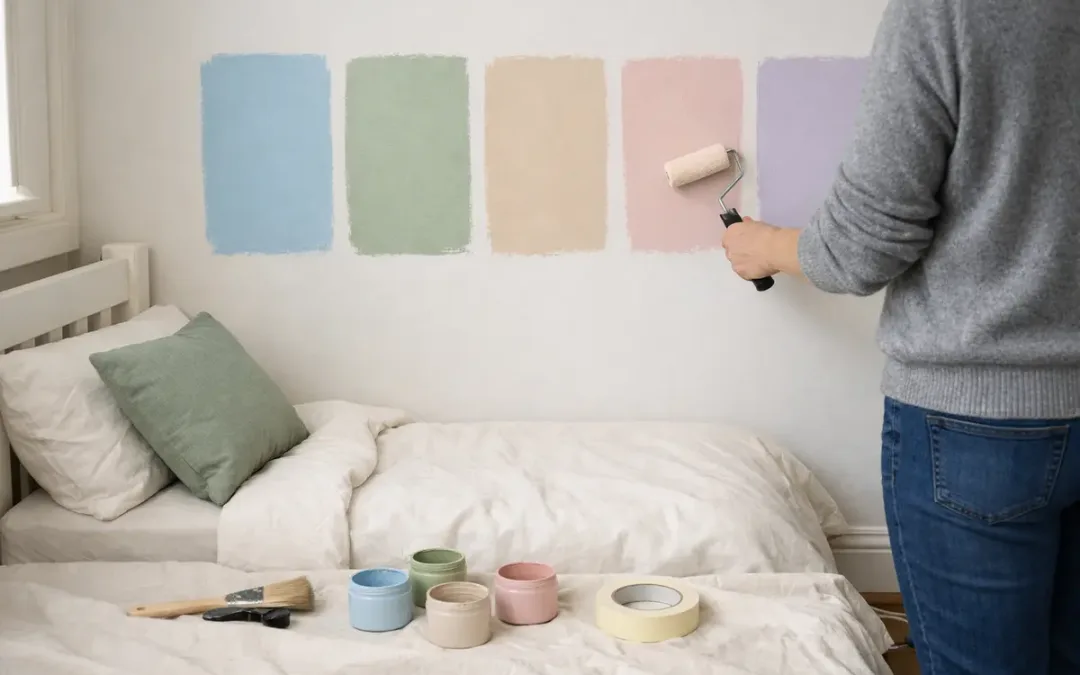
Paint large sample patches on more than one wall, or use movable sample sheets. Check them in daylight and again with the evening lamp on. A colour that looks gentle at midday can turn cold, peachy or dull after dark. Bedtime is the real test.
Using accents and patterns without making the room too busy
A calm bedroom does not need to be plain. Children usually want colour, character and something that feels like theirs. The safer route is to keep the main wall colour soft, then add stronger colours through items you can change easily.
Cushions, lampshades, artwork, rugs and bedding can carry favourite colours without overwhelming the room. If tastes change next year, you can swap a duvet cover much faster than repainting four walls on a Sunday evening.
Choose one main accent colour, or two if they sit well together. Too many competing shades can make the room feel busy even when everything is tidy. The same applies to pattern. Small stars, clouds, leaves or simple stripes usually feel gentler than large high-contrast designs.
Keep the area around the bed calmer than the play or desk area. A soft wall behind the pillow, simple bedding and a low-glow lamp can send a quiet message: this part of the room is for winding down. The brighter poster wall can live elsewhere.
Best calming colour combinations to try
If you feel stuck, start with a simple palette: one main colour, one supporting neutral and a small accent. That keeps the room balanced and makes shopping for curtains, bedding and storage much easier.
- Soft blue with warm white and natural wood: airy, gentle and good for sunny rooms.
- Sage green with oatmeal and pine: calm, natural and easy to age up as your child grows.
- Blush pink with warm grey and off-white: soft without becoming too sweet.
- Lavender with soft white and pale wood: restful, especially when the lavender has a muted base.
- Warm beige with dusty blue accents: a good choice if you want neutral walls with a little colour.
- Clay or soft terracotta with cream and muted green: cosy for cooler rooms and lovely with woven textures.
Before choosing, place fabric samples or existing bedding against your paint swatches. Colours need to get along in the actual room. A shade that looks beautiful alone can clash with curtains or make a carpet look more orange than expected.
The most calming colours for a child’s bedroom are usually soft blues, gentle greens, warm neutrals, muted pinks, lilacs and earthy tones. The best choice is the one that suits your child’s taste, the room’s light and the furniture already there.
Aim for a simple palette that feels restful in the evening rather than over-designed for daytime photos. Start with two or three sample pots, paint generous patches near the bed and check them after dark. If the colour makes the room feel quieter when the lamp goes on, you are heading in the right direction.
Tags: calming colors, child bedroom colors, kids bedroom paint, sleep friendly bedroom, soft blue bedroom, sage green kids room, warm neutral bedroom, calming bedroom ideas, best colors for child sleep, children’s bedroom colour schemes, MG0375