By the time a roof is visibly leaking indoors, the problem has usually existed for months, sometimes years. Water finds the path of least resistance, and that path is rarely a straight line from the point of failure to the stain on your ceiling. As a roofing contractor, most of the “sudden” leaks we get called out to aren’t sudden at all, they’re the final, visible stage of a problem that gave plenty of warning signs long before anyone noticed.
Granules collecting in gutters
If you clean your gutters and find what looks like coarse, dark sand collecting at the bottom, that’s granule loss from asphalt shingles. A small amount is normal as a roof ages, but a build-up, especially from a roof under 15 years old, suggests the protective layer is wearing through faster than it should. Once granules are gone in a patch, that section of shingle is exposed to UV and weather damage well ahead of the rest of the roof.
Daylight in the loft
Head into the loft on a bright day with the lights off. Any pinpricks of daylight coming through the roof deck are gaps that also let water through when it rains, even if you haven’t noticed a leak yet, a fine gap lets light through immediately but might only let water through during heavier or wind-driven rain, which is why this is often missed until a storm makes it obvious.
Sagging in the roofline
Stand back from the property and look along the roofline from the ground. A dip or sag, rather than a straight line, usually points to a structural issue — commonly water-damaged decking or rafters that have lost their strength. This isn’t a cosmetic issue and shouldn’t wait; a sagging section is a sign the roof’s structure is already compromised, not just its weatherproofing.
Curling or cracked shingles
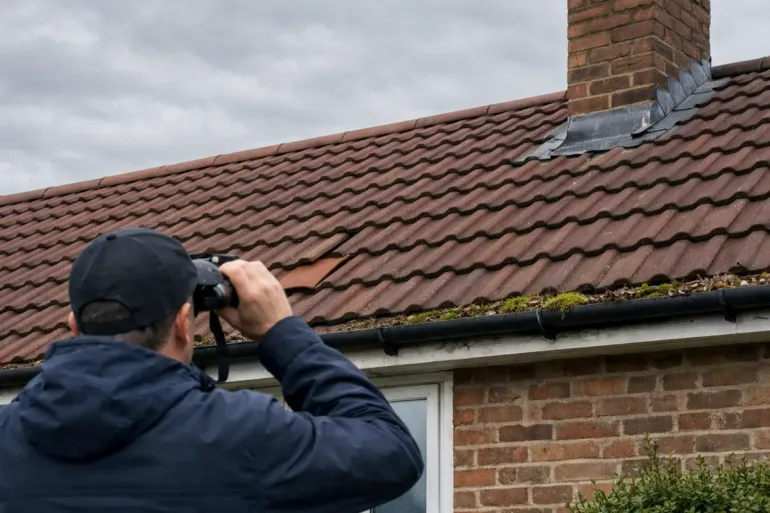
Shingles that are curling at the edges or visibly cracked have lost flexibility, usually from age and sun exposure. In this state they no longer seal properly against wind-driven rain, and they’re significantly more likely to lift or blow off entirely in bad weather. Curling is easiest to spot from a distance with binoculars rather than climbing up for a close look, which isn’t something we’d recommend doing yourself in any case.
Rusted or damaged flashing
Flashing, the metal strips sealing joins around chimneys, vents and roof valleys is one of the most common failure points on an otherwise sound roof. Visible rust, gaps, or flashing that’s come away from the surface it’s sealing is a near-guaranteed route for water ingress, and it’s often a far cheaper fix than people expect since it doesn’t necessarily mean the whole roof needs attention.
Damp smell or discolouration in the loft, without a visible leak
Sometimes the first sign isn’t visual at all. A persistent musty smell, or faint discolouration on the underside of the roof deck or insulation, can mean moisture is getting in slowly and drying out between rain events, rather than causing an obvious drip. This slow-cycle dampness is actually more damaging long-term than an obvious leak, because it goes untreated for longer while doing steady damage to timber and insulation.
When to call a professional rather than wait
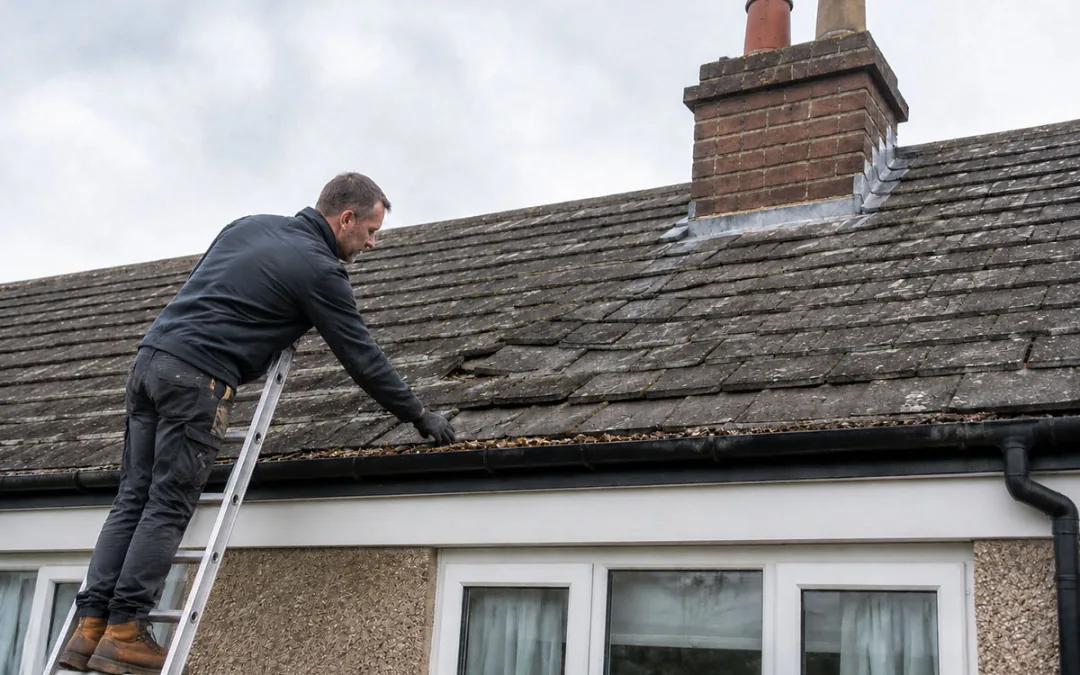
Any one of the signs above is worth a proper inspection rather than a wait-and-see approach. Roofs fail gradually, and the cost difference between fixing a section of damaged flashing now versus replacing water-damaged decking, insulation and possibly ceiling finishes after a full leak develops is significant, often the difference between a same-day repair and a job running into thousands. If you’re not confident getting into the loft or up a ladder safely, that’s reason enough on its own to get someone out to look rather than push it further.
D Blackburn Contractors has been carrying out roofing and building work across Lancashire and the Ribble Valley since 2004, and offers roof inspections and repairs for homeowners and landlords across the region.
Tags: failing roof signs, roof damage, roof inspection, roof repair, damaged roof flashing, cracked roof shingles, sagging roofline, signs of a leaking roof, MG0377